DJI Phantom 3

Instagram Head Adam Mosseri Moving to London


Instagram Head Adam Mosseri Moving to London

Instagram boss Adam Mosseri is set to move to London later this year as part of his ongoing fight to keep the social network thriving in an increasingly competitive marketplace. The move is partly due to Mosseri's personal desire to relocate to the British capital, the Financial Times first reported.

With the move, which will be not be permanent, Mosseri will also oversee the Instagram team from parent company Meta's new Kings Cross headquarters. The UK is already home to a number of Instagram teams, and the company could be looking to take advantage of the city's cheaper cost of labor compared with Silicon Valley, following its first-ever drop in revenue.

"Given the global nature of his role, Adam will be temporarily based out of London later this year," said a spokesperson for Meta. "London is already Meta's largest engineering hub outside of the US, with over 4,000 employees across our offices, including a dedicated Instagram product team with people focused on building long term solutions for creators."

The company is struggling to define its strategy amid competition from rival app TikTok. Last week Mosseri put out a video defending changes to the app, which included a greater focus on video content and testing a full-screen home feed, only to his reverse his decision to keep the changes days later. Instagram is working to shore up its stable of high-profile influencers, but the changes received backlash from two of the app's top 10 most-followed users, Kim Kardashian and Kylie Jenner.

Mosseri has worked for Meta since 2008, and became head of Instagram in 2018 following the departure of the app's co-founders from the company. In December 2021 he testified before Congress about safety, after pausing the development of Instagram Kids earlier in the year.


Source

Tags:


9 Great Reads From CNET This Week: iOS 16, Metaverse, Ms. Marvel and More


9 Great Reads From CNET This Week: iOS 16, Metaverse, Ms. Marvel and More

This week brought us Apple's annual Worldwide Developers Conference, when the maker of Macs and iPhones shares details of coming changes to the software that runs those and other devices. WWDC is on the geeky side, but it's also pretty clear what's in store for everyone who uses Apple products.

We found out, for instance, about iOS 16, coming to iPhones later this year with features like an updated lock screen heavy on customization; Apple Pay Later, which splits the cost of a purchase across four payments; and Safety Check, designed to help people at risk of abuse. We got a peek at MacOS Ventura, along with a redesigned MacBook Air and a 13-inch MacBook Pro, both of which will pack the new M2 chip. And we learned about WatchOS 9 and iPadOS 16, too.

Our stories about WWDC came to you among the many in-depth features and thought-provoking commentaries that also appeared on CNET this week. So here you go. These are the stories you don't want to miss. 

Commentary: Apple's changes to the iPhone lock screen are a bigger deal than you think.

iOS 16 logo shown on an iPhone with a yellow background
James Martin/CNET

Commentary: Moderating social media is hard. Moderating the metaverse will be harder. 

A woman wearing a VR headset and holding controllers in a room lit up like a disco ball
Getty/Xinhua News Agency

As tech's reach grows, companies are taking on a new, very personal, set of issues.

Apple logo designed to look like a padlock
Screenshot/CNET

Here's why people freeze in place and have waking nightmares.

A bed floating in midair
OsakaWayne Studios

The new MCU series about a Pakistani Muslim-American superhero shows just how far Hollywood has come.   

Kamala Khan, aka Ms. Marvel, with mask and scarf, and hands on hips
Disney Plus

I don't recommend it.

A man sitting up with a sleeping bag wrapped around him
Ben White

Initial analysis of the samples from asteroid Ryugu show the rock could change our understanding of the early solar system.

A spacecraft with two large solar arrays touches down on a rocky gray surface
JAXA/Akihiro Ikeshita

Commentary: WatchOS 9's new running features could pair nicely with the rumored Apple Watch Explorer Edition.

Apple Watch Series 7 on a wrist
Lisa Eadicicco/CNET

Google, Apple, and Microsoft expect passkeys can completely replace passwords. Apple support arrives in iOS 16 and MacOS Ventura.

A dialog box on a Mac screen shows how passkey logon works
Apple

§

This story is part of WWDC 2022, CNET's complete coverage from and about Apple's annual developers conference.

What's happening

Apple's WatchOS 9 update will bring new athletic performance metrics to the Apple Watch, among other key improvements to health and fitness tracking.

Why it matters

The update could be setting the stage for the rumored rugged Apple Watch expected to debut this year.

What's next

Apple will launch WatchOS 9 in the fall, possibly alongside three new Apple Watch models.

If WatchOS 9 serves as any indication, the Apple Watch's future is all about health and fitness. That message was front and center in June when Apple unveiled the new software, which is now available in beta ahead of its fall launch.  

The update will bring more sports-performance tracking metrics (especially for runners), deeper sleep monitoring and tools for logging medication. It's impossible to know what to expect until Apple announces its next smartwatch (or smartwatches). But WatchOS 9's focus on athletic training seemingly sets the stage for the rumored Apple Watch Explorer Edition, which we might see later this year. 

Read more: This Stylish, Luxury Hybrid Watch (Almost) Made Me Ditch My Apple Watch

It also suggests Apple wants its smartwatch to appeal to pro athletes, casual exercise enthusiasts and those who need to monitor cardiac health all at the same time. The next crop of Apple Watches rumored for the fall will likely come with new hardware to better support that vision -- hopefully with better battery life, too.

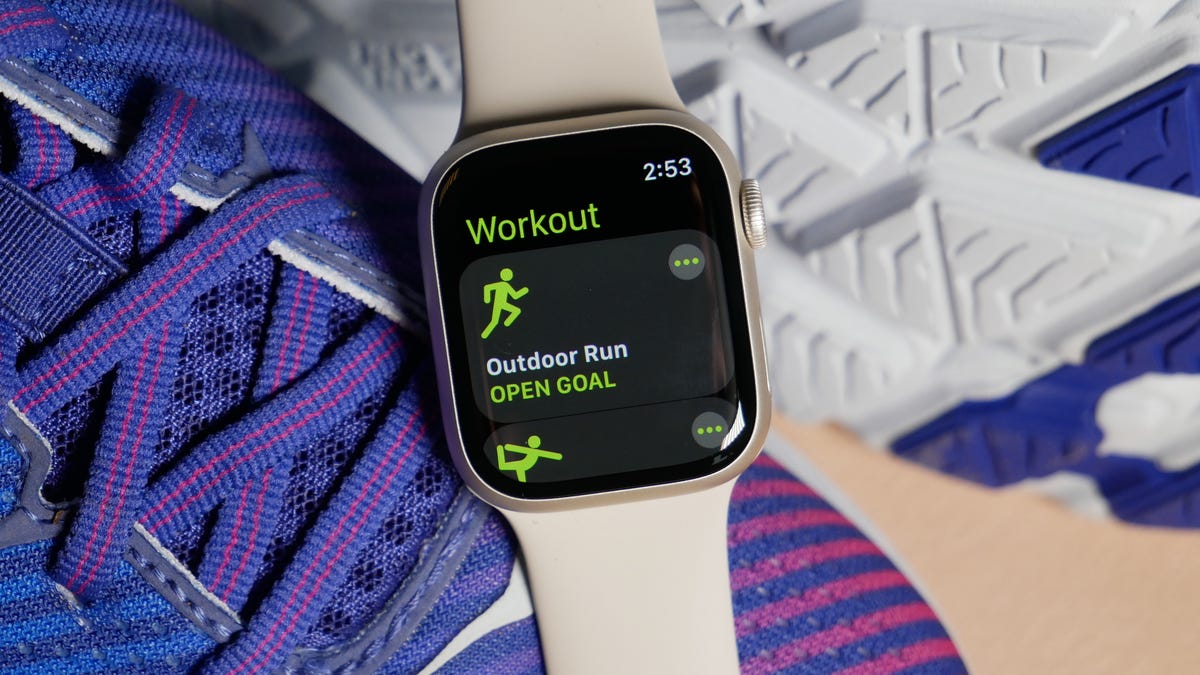
WatchOS 9's workout features would be a great for an Explorer Edition Apple Watch

The Apple Watch Series 7 showing a workout screen

The Apple Watch Series 7

Lexy Savvides/CNET

Apple sprinkled a bunch of new workout tools and metrics throughout WatchOS 9. These include new running data points like stride length and ground contact time, the ability to track heart rate zones, interval training, a multisport workout type for triathlons and kickboard detection for swimmers. The announcement also comes after Apple made improvements to the Apple Watch's cycling detection last year. 

Only Apple knows what's in store for the future. But it feels like no coincidence that this update is coming as Apple is expected to launch a rugged Apple Watch designed for extreme sports this fall. Bloomberg reports an Apple Watch with extra impact resistance similar to Casio's G-Shock watches could be in the works. The watch is sometimes referred to as the Explorer Edition internally and may have a rubberized casing for additional durability, the report said. The device would reportedly be marketed as an alternative option for athletes and hikers alongside the standard Series 8 and next-generation Apple Watch SE.

Read moreiOS 16's Lock Screen Upgrades Make the iPhone More Like a Smartwatch

The Apple Watch already has plenty to offer fitness buffs, with many workout choices, activity goals and reminders, heart rate notifications and metrics like VO2 max and elevation. But until WatchOS 9 arrives, the Apple Watch will lack running-specific features that athletes might find useful. Garmin's running watches, for example, include tools like training programs for specific types of races, pace guidance and running metrics like cadence and stride length, among other features that vary by the model. 

The Apple Watch is already the world's most popular smartwatch with 36.1% of global shipments in the first quarter of 2022, according to Counterpoint Research. With the new measurements geared toward runners coming in WatchOS 9, Apple could further solidify its grip on the market by appealing to the more niche competitive sports audience. 

Even with the new features in WatchOS 9, the Apple Watch still won't offer quite as much feedback for runners as some specialized watches. But the new software certainly brings the Apple Watch closer than ever before.  

What else WatchOS 9 might tell us about the Apple Watch's future

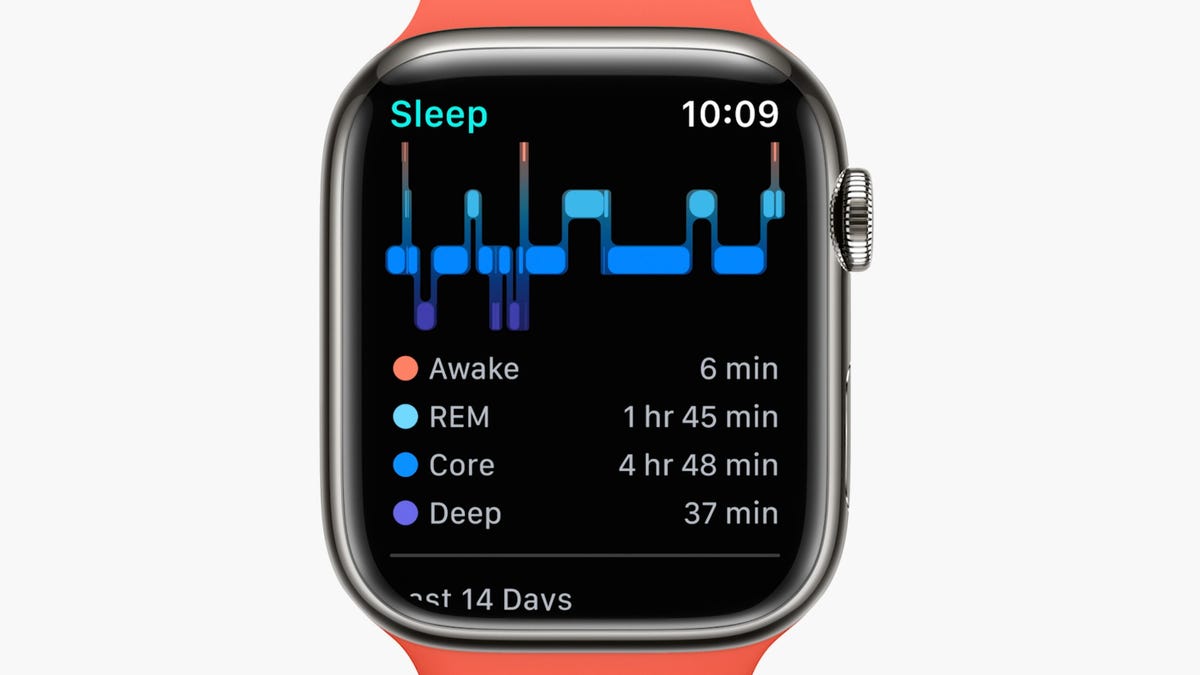
Apple Watch Sleep tracking

The Apple Watch's new Sleep Stages feature in WatchOS 9

Screenshot/CNET

Apple's emphasis on fitness was at the heart of its WatchOS 9 announcement. But some of the software's other updates might also suggest Apple's future direction. For example, the company did more on sleep tracking by introducing Sleep Stages, a feature that analyzes the amount of time spent in various phases of slumber. Apple is playing catch-up in this regard; rival fitness trackers from Fitbit, Oura and Samsung have supported this feature for years.

Apple's expansion in sleep tracking indicates it expects Apple Watches to be worn overnight more frequently. That makes me believe Apple could be planning some type of improvement to the Apple Watch's battery life, although there's no way to know for sure until the company reveals its next watch. 

Apple says its smartwatch can last for 18 hours on a single charge, and anecdotally I typically get about one to two days out of it before it needs a power boost. The Apple Watch's battery life hasn't changed meaningfully in years, but Apple has worked around this by implementing faster charging speeds with the Series 6 and 7.  

Apple will likely continue down this path rather than dramatically improving the watch's battery life. But there's also a chance Apple could introduce a new low-power mode with more functionality than the watch's current power reserve feature, says Bloomberg. It was supposed to launch with WatchOS 9, according to the report, although Apple didn't mention a new low-power option during Monday's event. 

Considering that battery life has been one of the Apple Watch's persistent criticisms -- and not to mention Bloomberg's reliable track record -- I wouldn't be surprised to see this capability arrive in the future. And remember: Apple introduced new WatchOS 8 features for cyclists alongside the Apple Watch Series 7 during its fall product event in 2021. So there's a chance Apple could have more software features to announce later this year. 

WatchOS 9 also provides another signal that Apple is expanding its efforts in general health and wellness. A new feature called AFib History will allow those diagnosed with atrial fibrillation to access more information about their condition, such as an estimate of how often their heart rhythm is showing signs of A-fib. Another highlight in WatchOS 9 is the ability to track prescriptions and receive medication reminders. 

These updates indicate Apple sees its watch as a tool for tracking bodily changes over time that can be shared with physicians. And if reports from Bloomberg and The Wall Street Journal prove accurate, Apple will take that idea a step further by adding a temperature sensor to the Series 8.

Many of the Apple Watch's major turning points have historically been tied to new hardware releases. The Series 3, for example, was the first model to support cellular connectivity, making the Apple Watch feel like a stand-alone product rather than an iPhone companion. The Series 4 brought ECG monitoring and fall detection, broadening the Apple Watch's role as a health device.

WatchOS 9 isn't as big of a leap forward as those launches. But it will bring functionality that could be crucial in Apple's mission to make the Apple Watch the ultimate health and fitness device. And that's very telling of Apple's immediate and long term plans for the Apple Watch. 


Source

Tags:


Pegasus Spyware and Citizen Surveillance: Here's What You Should Know


Pegasus Spyware and Citizen Surveillance: Here's What You Should Know

For digital spying technology, it's a doozy of a case. Security researchers have revealed evidence of attempted or successful installations of Pegasus, software made by Israel-based cybersecurity company NSO Group, on phones belonging to activists, rights workers, journalists and businesspeople. They appear to have been targets of secret surveillance by software that's intended to help governments pursue criminals and terrorists, and as the months go by, more and more Pegasus infections are emerging.

The most recent revelation is that Pegasus infected the phones of at least 30 Thai activists, according to a July report from Citizen Lab, a Canadian security organization at the University of Toronto. Apple warned those with infected phones in November.

To try to thwart such attacks, Apple has built a new Lockdown Mode into iOS 16, its iPhone software update due to arrive later in 2022, and into its upcoming MacOS Ventura.

The US government is one of the most powerful forces unleashed against Pegasus — even though the CIA and FBI were Pegasus customers, as reported by The New York Times in January. The US Justice Department has launched a criminal investigation, The Guardian said in February, after a whistleblower said NSO Group offered "bags of cash" for sensitive mobile phone data from a US tech firm, Mobileum. The spyware was found on the phones of at least nine State Department officials who were either based in Uganda or involved in matters associated with the African country, Reuters and The New York Times reported in December. 

Pegasus is the latest example of how vulnerable we all are to digital prying. Our phones store our most personal information, including photos, text messages and emails. Spyware can reveal directly what's going on in our lives, bypassing the encryption that protects data sent over the internet.

Pegasus has been a politically explosive issue that's put Israel under pressure from activists and from governments worried about misuse of the software. In November, the US federal government took much stronger action, blocking sale of US technology to NSO by putting the company on the government's Entity List. NSO has suspended some countries' Pegasus privileges but has sought to defend its software and the controls it tries to place on its use. NSO Group didn't respond to a request for comment, and the Justice Department declined to comment.

Here's what you need to know about Pegasus.

What is NSO Group?

It's an Israel-based company that licenses surveillance software to government agencies. The company says its Pegasus software provides a valuable service because encryption technology has allowed criminals and terrorists to go "dark." The software runs secretly on smartphones, shedding light on what their owners are doing. Other companies provide similar software.

Hulio co-founded the company in 2010. NSO also offers other tools that locate where a phone is being used, defend against drones and mine law enforcement data to spot patterns.

NSO has been implicated by previous reports and lawsuits in other hacks, including a reported hack of Amazon founder Jeff Bezos in 2018. A Saudi dissident sued the company in 2018 for its alleged role in hacking a device belonging to journalist Jamal Khashoggi, who had been murdered inside the Saudi embassy in Turkey that year.

New Yorker coverage details some of NSO Group's inner workings, including its argument that Pegasus is similar to military equipment that countries routinely sell to other countries, the company's tight ties to the Israeli government and its recent financial difficulties. It also revealed that NSO employees posted on the wall a detailed Google analysis of one Pegasus attack mechanism that concludes its NSO's abilities "rival those previously thought to be accessible to only a handful of nation states."

In the case of the Thai activists, NSO Group didn't comment specifically but told the Washington Post, "Politically motivated organizations continue to make unverifiable claims against NSO."

What is Pegasus?

Pegasus is NSO's best-known product. It can be installed remotely without a surveillance target ever having to open a document or website link, according to The Washington Post. Pegasus reveals all to the NSO customers who control it — text messages, photos, emails, videos, contact lists — and can record phone calls. It can also secretly turn on a phone's microphone and cameras to create new recordings, The Washington Post said.

General security practices like updating your software and using two-factor authentication can help keep mainstream hackers at bay, but protection is really hard when expert, well-funded attackers concentrate their resources on an individual. And Pegasus installations have employed "zero click" attacks that take advantage of vulnerabilities in software like Apple Messages or Meta's WhatsApp to silently install software. 

Pegasus isn't supposed to be used to go after activists, journalists and politicians. "NSO Group licenses its products only to government intelligence and law enforcement agencies for the sole purpose of preventing and investigating terror and serious crime," the company says on its website. "Our vetting process goes beyond legal and regulatory requirements to ensure the lawful use of our technology as designed."

Human rights group Amnesty International, however, documents in detail how it traced compromised smartphones to NSO Group. Citizen Lab said it independently validated Amnesty International's conclusions after examining phone backup data and since 2021 has expanded its Pegasus investigations.

In September, though, Apple fixed a security hole that Pegasus exploited for installation on iPhones. Malware often uses collections of such vulnerabilities to gain a foothold on a device and then expand privileges to become more powerful. NSO Group's software also runs on Android phones.

Why is Pegasus in the news?

Forbidden Stories, a Paris journalism nonprofit, and Amnesty International, a human rights group, shared with 17 news organizations a list of more than 50,000 phone numbers for people believed to be of interest to NSO customers.

The news sites confirmed the identities of many of the individuals on the list and infections on their phones. Of data from 67 phones on the list, 37 exhibited signs of Pegasus installation or attempted installation, according to The Washington Post. Of those 37 phones, 34 were Apple iPhones.

The list of 50,000 phone numbers included 10 prime ministers, three presidents and a king, according to an international investigation released in mid-July by The Washington Post and other media outlets, though there's no proof that being on the list means an NSO attack was attempted or successful.

The episode hasn't helped Apple's reputation when it comes to device security. "We take any attack on our users very seriously," Federighi said. The company said it'll donate $10 million and any damages from the lawsuit to organizations that are advocating for privacy and are pursuing research on online surveillance. That's a drop in the bucket for Apple, which reported a profit of $20.5 billion for its most recent quarter, but it can be significant for much smaller organizations, like Citizen Lab.

Whose phones did Pegasus infect?

In April, Citizen Lab also revealed that Pegasus infected the phones of at least 51 people in the Catalonia region of Spain. NSO Group Chief Executive Shalev Hulio told The New Yorker, which covered the hacks in depth, that Spain has procedures to ensure such use is legal, but Citizen Lab said Pegasus attacks targeted the phone of Jordi SolĂ©, a pro-independence member of the European Parliament, digital security researcher Elies Campo and Campo's parents, according to the New Yorker. Catalonia is seeking political independence from Spain, but Spanish police have cracked down on the independence movement.

In addition to Mangin, two journalists at Hungarian investigative outlet Direkt36 had infected phones, The Guardian reported. 

A Pegasus attack was launched on the phone of Hanan Elatr, wife of murdered Saudi columnist Jamal Khashoggi, The Washington Post said, though it wasn't clear if the attack succeeded. But the spyware did make it onto the phone of Khashoggi's fiancee, Hatice Cengiz, shortly after his death.

Seven people in India were found with infected phones, including five journalists and one adviser to the opposition party critical of Prime Minister Narendra Modi, The Washington Post said.

And six people working for Palestinian human rights groups had Pegasus-infected phones, Citizen Lab reported in November.

What are the consequences of the Pegasus situation?

The US cut off NSO Group as a customer of US products, a serious move given that the company needs computer processors, phones and developer tools that often come from US companies. NSO "supplied spyware to foreign governments" that used it to maliciously target government officials, journalists, businesspeople, activists, academics and embassy workers. These tools have also enabled foreign governments to conduct transnational repression," the Commerce Department said.

Apple sued NSO Group  in November, seeking to bar the company's software from being used on Apple devices, require NSO to locate and delete any private data its app collected, and disclose the profits from the operations. "Private companies developing state-sponsored spyware have become even more dangerous," said Apple software chief Craig Federighi. That suit came after Meta's WhatsApp sued NSO Group in 2019.

French President Emmanuel Macron changed one of his mobile phone numbers and requested new security checks after his number appeared on the list of 50,000 numbers, Politico reported. He convened a national security meeting to discuss the issue. Macron also raised Pegasus concerns with Israeli Prime Minister Naftali Bennett, calling for the country to investigate NSO and Pegasus, The Guardian reported. The Israeli government must approve export licenses for Pegasus.

Israel created a review commission to look into the Pegasus situation. And on July 28, Israeli defense authorities inspected NSO offices in person.

European Commission chief Ursula von der Leyen said if the allegations are verified, that Pegasus use is "completely unacceptable." She added, "Freedom of media, free press is one of the core values of the EU."

The Nationalist Congress Party in India demanded an investigation of Pegasus use.

Edward Snowden, who in 2013 leaked information about US National Security Agency surveillance practices, called for a ban on spyware sales in an interview with The Guardian. He argued that such tools otherwise will soon be used to spy on millions of people. "When we're talking about something like an iPhone, they're all running the same software around the world. So if they find a way to hack one iPhone, they've found a way to hack all of them," Snowden said.

What does NSO have to say about this?

NSO acknowledges its software can be misused. It cut off two customers in recent 12 months because of concerns about human rights abuses, according to The Washington Post. "To date, NSO has rejected over US $300 million in sales opportunities as a result of its human rights review processes," the company said in a June transparency report.

However, NSO strongly challenges any link to the list of phone numbers. "There is no link between the 50,000 numbers to NSO Group or Pegasus," the company said in a statement.

"Every allegation about misuse of the system is concerning me," Hulio told the Post. "It violates the trust that we give customers. We are investigating every allegation."

In a statement, NSO denied "false claims" about Pegasus that it said were "based on misleading interpretation of leaked data." Pegasus "cannot be used to conduct cybersurveillance within the United States," the company added.

Regarding the alleged infection of State Department phones, NSO Group didn't immediately respond to a request for comment. But it told Reuters it canceled relevant accounts, is investigating, and will take legal action if it finds misuse.

NSO will try to reverse the US government's sanction. "We look forward to presenting the full information regarding how we have the world's most rigorous compliance and human rights programs that are based the American values we deeply share, which already resulted in multiple terminations of contacts with government agencies that misused our products," an NSO spokesperson said.

In the past, NSO had also blocked Saudi Arabia, Dubai in the United Arab Emirates and some Mexican government agencies from using the software, The Washington Post reported.

How can I tell if my phone has been infected?

Amnesty International released an open-source utility called MVT (Mobile Verification Toolkit) that's designed to detect traces of Pegasus. The software runs on a personal computer and analyzes data including backup files exported from an iPhone or Android phone.
Source

Tags:


Russia Partially Restricts Access to Facebook


Russia Partially Restricts Access to Facebook

The Russian government says it's partially restricting access to Facebook, a move it took after claiming the social network had censored some Russian media outlets. 

In a statement Friday, Russia's communications regulator accused Facebook of violating "fundamental human rights" by allegedly restricting the official accounts of four Russian media outlets on its platform.

In a statement posted to Twitter on Friday, Facebook executive Nick Clegg said the social network refused to give in to Russian demands that it stop fact-checking and labeling content posted by the media outlets. 

"Yesterday, Russian authorities ordered us to stop the independent fact-checking and labelling of content posted on Facebook by four Russian state-owned media organizations," said Clegg. "We refused. As a result, they have announced they will restrict the use of our services." 

Clegg, who is president of global affairs for Facebook parent Meta, said the company wants ordinary Russians to continue to make their voice heard on its apps. 

The Russian government's measure to "protect Russian media" comes as the country's military continues its invasion of Ukraine. Russian President Vladimir Putin declared the start of a "special military operation" in Ukraine early Thursday. Shortly after, explosions were reported in multiple cities, including Kyiv, the country's capital.

US President Joe Biden, along with other international leaders, has unveiled sweeping economic sanctions against Russia in response to the attacks. 

The extent of the Russian government's restrictions and their impact on Facebook and Meta's operations in the country wasn't immediately clear. 


Source

Tags:


Snap finally releases a how to use Snapchat video


Snap finally releases a how to use Snapchat video

It's no secret Snapchat is confusing to use. In fact, when Snap, the social media app's parent company, released its IPO filing documents earlier this month, the app's confusing user interface was listed as one of the risk factors for investors.

Lo and behold, on Friday, Snap released the user manual many bewildered Snapchatters (or their parents) have been asking for. It came in the form of a video, labeled "Snapchat Product Overview," in its "roadshow" materials -- the stuff it uses to convince potential investors to buy in.

"Making a Snap is simple," a friendly-voiced narrator says in the video as he takes more than eight and a half minutes to explain the app.

Among the things the video covers: how to record a video, how to use lenses and how to use a geofilter.

Watch the whole thing here.

CNET Magazine: Check out a sampling of the stories you'll find in CNET's newsstand edition.

Batteries Not Included: The CNET team shares experiences that remind us why tech stuff is cool.


Source

Tags:


Tesla Cybertruck Reservations Now Limited to North America


Tesla Cybertruck Reservations Now Limited to North America

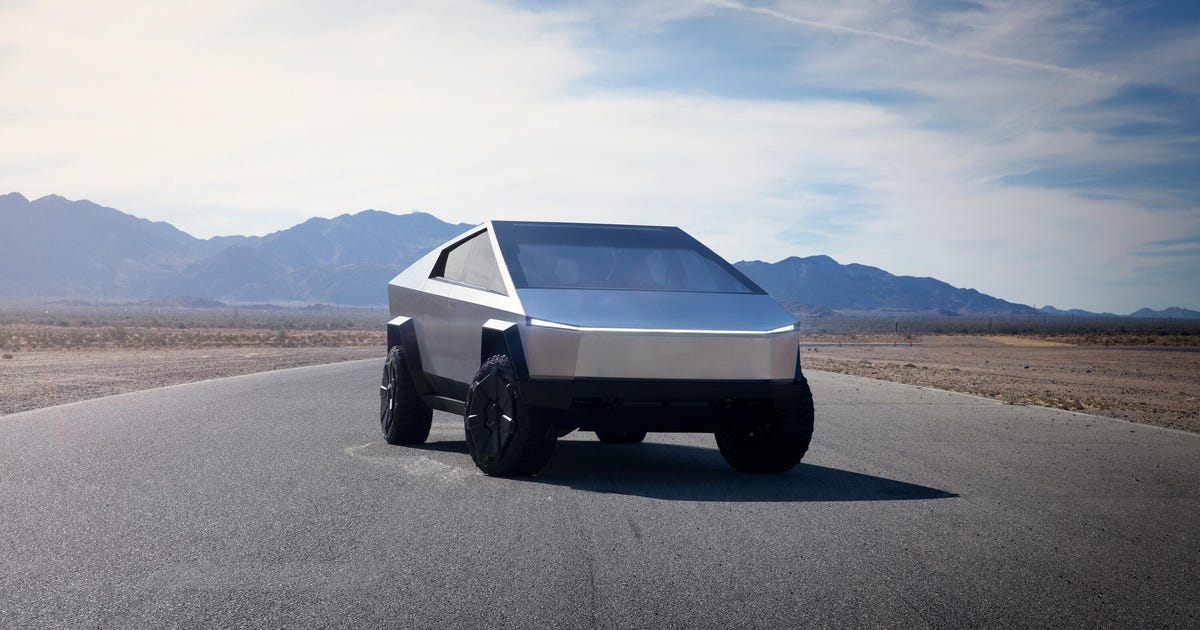
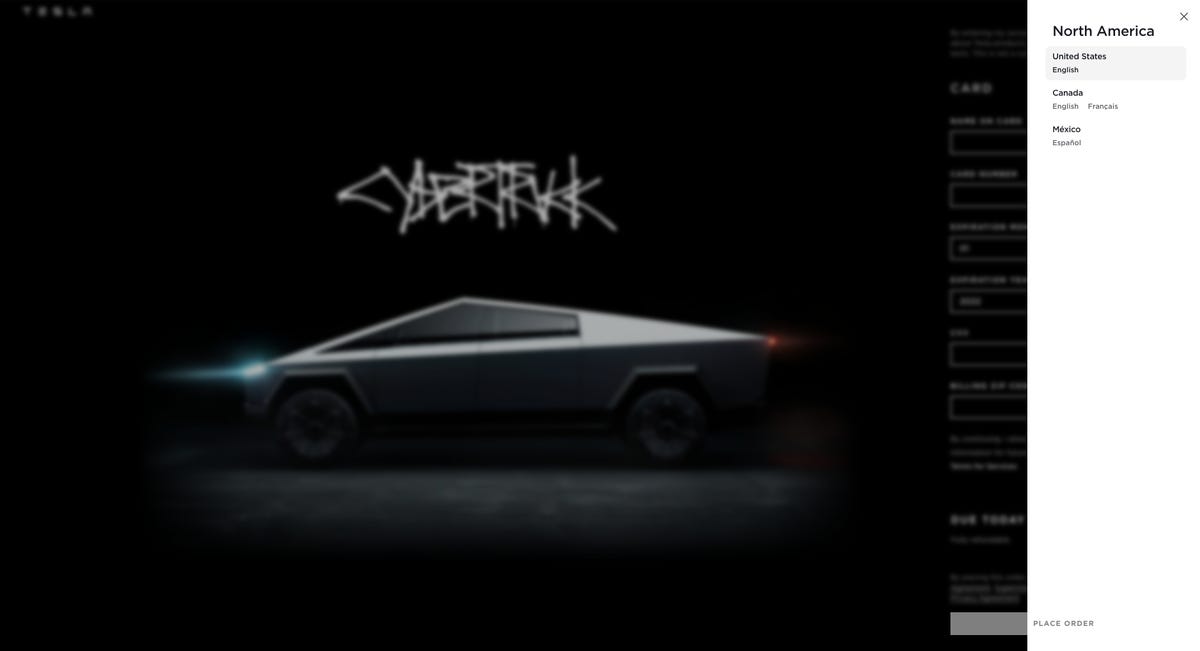
Tesla is limiting reservations of its upcoming Cybertruck, first announced in 2019, to North America, cutting off Europe and Asia. 

If you try to change the region on the Cybertruck reservation page, the only options now available are the United States, Canada and Mexico. The change was reported earlier Monday by Electrek. 

screen-shot-2022-05-16-at-3-42-00-pm.png

Cybertruck reservation page has dropped Europe and Asia.

Screengrab via Imad Khan/CNET

The company began taking reservations for the Semi earlier today, requiring a $20,000 deposit. 

Earlier this year, Tesla CEO Elon Musk blamed ongoing supply chain issues for the truck's lengthy lead-up to launch. At the moment, production is expected to start in 2023

Tesla dissolved its public relations relations department in 2020, meaning it's not possible to ask for a comment. Musk hasn't tweeted about the change, either. 

More to come.


Source

Tags:


Volvo Brings Apple CarPlay to Android Automotive-Powered Cars


Volvo Brings Apple CarPlay to Android Automotive-Powered Cars

If you paid attention to recent reviews of Volvo models like the XC40 Recharge and C40 Recharge, you may have picked up on a major omission in these vehicles -- namely, Apple CarPlay. Volvo promised an update would remedy the lack of this desirable smartphone mirroring solution, and now that's finally happening.

Volvo this week announced that a new over-the-air update would finally bring Apple CarPlay back to new Volvo vehicles. This free update applies to new Volvo vehicles that are running the Android Automotive-based infotainment system. It doesn't enable wireless CarPlay, so users will be stuck with the standard USB-based wired offering, but still, CarPlay is finally back.

Android Automotive is an automotive operating system that uses Android as its backbone. It allows for a much deeper integration with Google's services, like the ubiquitous Google Maps and the Play Store. However, when it started being added to various Volvo vehicles, CarPlay was nowhere to be found. That became a recurring negative point in our Volvo reviews, but this update will put an end to that problem.

That's a good thing, because CarPlay is a highly desirable feature that can very well sway buyers to consider one or another automaker, especially when it's offered on nearly every other vehicle being sold. This update will help boost Volvo's visibility as it begins the next step of its electrification strategy. Starting with the 2023 model year, Volvo will only sell electrified versions of its vehicles. If you're not ready to go fully electric just yet, there will still be mild-hybrid and plug-in hybrid variants available, but gas-only Volvos will soon be a thing of the past.


Source

Tags:

Search This Blog

Menu Halaman Statis

close