DJI Phantom 3

Huawei P40 Pro Plus' 10x optical zoom camera puts iPhone and Samsung to shame


Huawei P40 Pro Plus' 10x optical zoom camera puts iPhone and Samsung to shame

Huawei's P40 Pro Plus is the phone I was waiting for. The company announced the P40 range -- which also includes the base P40 and P40 Pro -- in March and while the P40 Pro proved it can take decent images, it was the Pro Plus that really pushes boundaries with its imagery. 

It's the first phone to come with a 10x optical zoom lens, which lets you get much closer to your subject with little loss in quality. It puts the iPhone 11 Pro's 2x optical zoom to shame. Even the Samsung S20 Ultra's 4x optical zoom can't compete. 

It actually has five cameras: a standard 50-megapixel lens, a 40-megapixel ultrawide-angle camera, an 8-megapixel 3x optical zoom, an 8-megapixel 10x optical zoom and a time-of-flight depth-sensing camera.

As a professional photographer, I was extremely keen to get my hands on this phone and take its cameras for a spin. 

boots-p40-pro-plus
Andrew Hoyle/CNET

First up, these neat flowering boots found here in Edinburgh, Scotland. The phone's standard 50-megapixel camera has captured this scene with loads of details, a perfect exposure and spot-on colors. 

boots-iphone-11-pro
Andrew Hoyle/CNET

The iPhone 11 Pro's version of the shot is also perfectly exposed with plenty of detail. The white balance is slightly different in each shot -- the P40 leans more on the magenta tones -- but not so much that either one looks wrong. 

calton-p40-pro-plus
Andrew Hoyle/CNET

On Edinburgh's Calton Hill, the P40 Pro Plus has done a great job of exposing for both the bright sky and the more shadowy areas of the buildings. There is again a slight magenta shift in the white balance, but otherwise it's a cracking shot. 

dean-church-1x-p40-pro-plus
Andrew Hoyle/CNET

The white balance and colors look spot on in this image, and the overall exposure is again superb.

20200608-122605
Andrew Hoyle/CNET

The same scene on the Galaxy S20 Ultra. The color saturation and contrast have both been lifted a touch, as is usually the case with images taken on a Samsung phone. Otherwise, there's little to separate them. 

dean-church-3x-p40-pro-plus
Andrew Hoyle/CNET

At 3x optical zoom, the P40 Pro Plus has still captured plenty of detail and managed to maintain its overall exposure.

dean-church-4x-s20-ultra
Andrew Hoyle/CNET

By comparison, the S20 Ultra's 4x zoom has got a little closer, but the lifted shadow detail on the tree has resulted in this image looking somewhat fake. 

dean-church-10x-p40-pro-plus

Huawei P40 Pro Plus, at 10x zoom.

Andrew Hoyle/CNET
dean-church-10x-s20-ultra

Samsung Galaxy S20 Ultra, at 10x zoom.

Andrew Hoyle/CNET

With both phones shooting at 10x optical zoom, it's clear that in this example, the P40 Pro Plus has underexposed the scene, causing the church to fall too much into shadow. The S20 Ultra's shot still looks a bit fake, but at least the church is clearly visible.

dean-church-100x-p40-pro-plus

Huawei P40 Pro Plus, at 100x zoom.

Andrew Hoyle/CNET
dean-church-100x-s20-ultra

Samsung Galaxy S20 Ultra, at 100x zoom.

Andrew Hoyle/CNET

Both phones can push their zoom limits all the way to 100x, and both are quite frankly terrible. 

dean-buildings-100x-p40-pro-plus

Huawei P40 Pro Plus, at 100x zoom.

Andrew Hoyle/CNET
dean-buildings-100x-s20-ultra

Samsung Galaxy S20 Ultra, at 100x zoom.

Andrew Hoyle/CNET

And the same is true here. Mushy details and an image that's completely unusable, beyond perhaps some kind of bragging rights, but I doubt even that would get you far. Sure, you could maybe try and zoom in on a celebrity you spotted in the distance, but their face would be so indistinguishable that you wouldn't be able to prove you saw them, no matter how much you boasted. Both these phones take great shots at 10x zoom, but it's not worth pushing it beyond that.

bird-10x-p40-pro-plus
Andrew Hoyle/CNET

The 10x zoom on the Huawei is great to play with though. I loved being able to snag this picture of what I'm pretty sure is a great tit. Wildlife photography has never been the realm of phones, due to their inability to get close up on the creatures you're photographing, but the P40 Pro Plus would certainly let you get some cracking shots of the wildlife that visits your garden. 

plane-p40-pro-plus
Andrew Hoyle/CNET

I also got close up on this plane descending to land. It's pretty dark, so I'm a little disappointed the phone hasn't brightened the subject up a bit. 

river-wide-p40-pro-plus

Huawei P40 Pro Plus, using super wide-angle lens.

Andrew Hoyle/CNET
img-9782

iPhone 11 Pro, using super wide-angle lens.

Andrew Hoyle/CNET

Switching to the wide-angle camera, the Huawei P40 Pro Plus doesn't provide as wide a view as the iPhone 11 Pro and while the image is sharp, the iPhone's shot is more vibrant.

river-3x-p40-pro-plus

Huawei P40 Pro Plus at 3x zoom.

Andrew Hoyle/CNET

river-2x-iphone-11-pro

iPhone 11 Pro at 2x zoom.

Andrew Hoyle/CNET

But it's the zoom skills that push the P40 Pro plus ahead. The iPhone 11 Pro's 2x maximum optical zoom doesn't really bring the statue into focus, while even at 3x on the P40 Pro Plus, it's becoming clearer that there's a figure in the water.

river-10x-p40-pro-plus

Huawei P40 Pro Plus at 10x zoom.

Andrew Hoyle/CNET

At 10x zoom, the statue fills the frame, with great exposure and colors too. The iPhone 11 Pro is simply no competition to the P40 Pro Plus when it comes to zoom. 

mushrooms-p40-pro-plus-iphone-11-pro-compare
Andrew Hoyle/CNET

Back in the super wide-angle mode, the P40 Pro Plus and the iPhone 11 Pro seem to be pretty much neck and neck. In this example, I prefer the iPhone 11 Pro's shot; the sky is richer, with more noticeable cloud detail and the wider view it offers has really helped emphasize the mushrooms in the foreground. 

foreground-leaves-p40-pro-plus-iphone-11-pro-compare
Andrew Hoyle/CNET

But the P40 Pro Plus takes the wide-angle win here as it's been able to keep that bright sky under control, resulting in a much better looking image overall. The iPhone has completely overexposed that sky.

low-light-p40-pro-plus

Huawei P40 Pro Plus in low light.

Andrew Hoyle/CNET
low-light-iphone-11-pro

iPhone 11 Pro in low light.

Andrew Hoyle/CNET

low-light-galaxy-s20-ultra

Galaxy S20 Ultra in low light.

Andrew Hoyle/CNET

In this low-light scene, using night mode on each phone, there's not much to choose between them. The iPhone 11 Pro's shot is the brightest of the three, but the Galaxy S20 Ultra's image is slightly sharper. That said, all three have done a great job of producing clear images in what was an extremely dark room. 

So far I'm very impressed with what the P40 Pro Plus can do. Shots from all its lenses look great and are up there with the best of today's super phones. The zoom really does put it in a league of its own and I'm keen to spend more time seeing what it can really do. I also want to test more of the video functions -- including night mode for video -- as well as the 32-megapixel front-facing camera. Stay tuned for more on the camera.

p40-pro-plus-product-3
Andrew Hoyle/CNET

What's the P40 Pro Plus like as a phone?

Beyond the great camera, the phone is packed with tons of top tech. The 6.5-inch display stretches right to the edges of the phone for razor-thin bezels, the Kirin 990 processor is a powerhouse and it supports 5G. It's got IP68 waterproofing too, as well as wireless charging, 8GB of RAM and a battery that'll comfortably last a whole day. It's basically got everything you'd expect from a top-end phone in 2020.

What it doesn't have are Google services, however, due to the ongoing restrictions on Huawei imposed by the US government. That means no Chrome, no Gmail and no Google Play Store for your apps. Huawei does have its own app store with some big names such as Zoom, VLC, Snapchat and TikTok. Various other apps -- including Facebook and WhatsApp -- can be downloaded as apk files from their official websites. Still, those of you who rely on Google's apps would be best shopping elsewhere.

Should I buy it?

The lack of Google services on the phone is certainly a big issue to be aware of and will be a deal-breaker for many. However, unlike with the P40 Pro I've already looked at, the P40 Pro Plus's camera is so impressive that it makes the phone a contender for your attention. 

p40-pro-plus-product-2
Andrew Hoyle/CNET

But it needs to be cheaper. At 1,399 euros (which converts to £1,250, AU$2,280 or $1,580, although it won't be on sale in the US), it's not an affordable phone. That's a problem, as its nearest rival, the Galaxy S20 Ultra -- which has similar zoom skills, 5G and Google services -- costs less ($1,400, £1,199 and AU$1,999).

There's no question Huawei's phone has got a lot going for it. The zoom would really appeal to those of you hoping to enjoy some garden wildlife photography. But if you're not in a hurry, it's worth waiting a little while after the phone's mid-June sale date to see if that price dips below the S20 Ultra. At the current prices, the Galaxy S20 Ultra is where my money would go.


Source

Tags:


The Duck Curve: The Cute-Sounding Energy Problem We'll Need to Fix


The Duck Curve: The Cute-Sounding Energy Problem We'll Need to Fix

To tackle the problem of climate change, a swift shift to clean energy technologies is underway. And homeowners have become part of the shift by generating clean energy (and saving money) by adopting solar panels

But any change as big as the energy transition comes with some challenges. The National Renewable Energy Laboratory found one years ago: Solar panels produce electricity when demand for it isn't at its highest, and stop producing in the evening, when demand ramps up. This can create a bit of a problem for the grid, though one that does have solutions, as we'll explore below. 

If you're considering solar panels, be sure to research the best solar companies, know how to avoid scams and understand the incentivesavailable to you.

What is the duck curve?

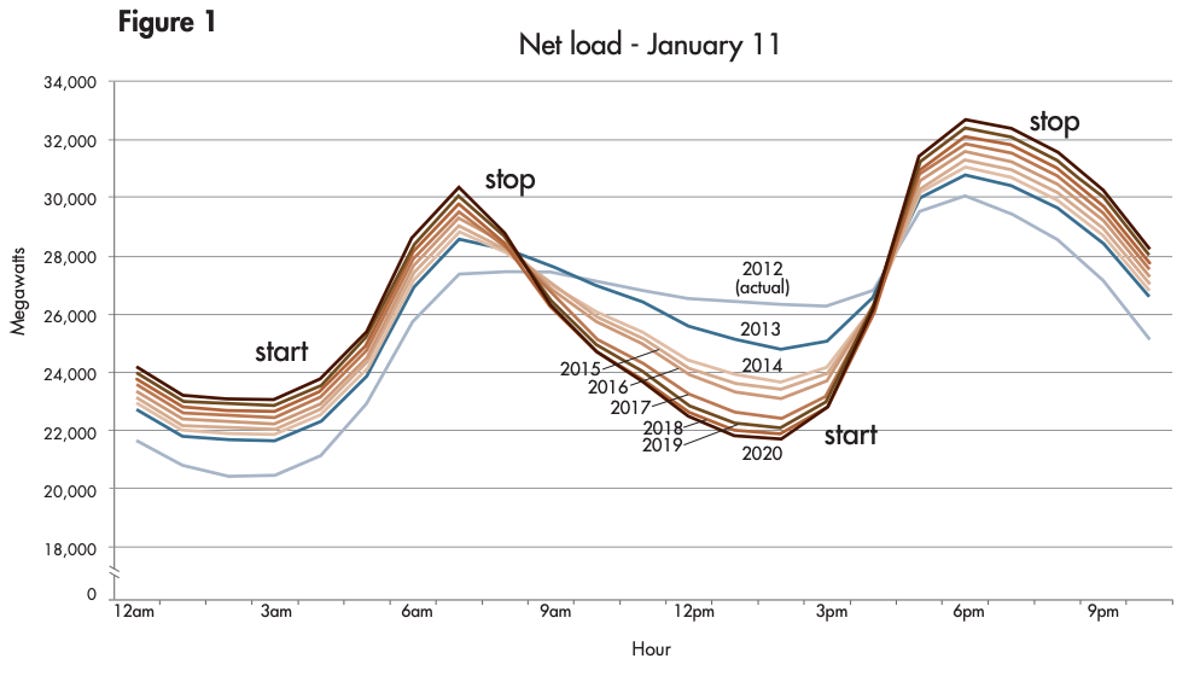
The duck curve is what you get when you plot solar power generation and energy demand on a graph. It's called a duck curve because it ends up resembling a duck. 

The duck curve, showing rising and falling demand throughout the day.

Do you see the duck?

California Independent System Operator/Screenshot Andrew Blok

There is a small peak in the morning, when energy demand grows as people start their day. This is the duck's tail. Then there is a drop-off in the middle of the day when many people are out of their homes. This is the duck's back. By evening, there is an even bigger spike in energy demands before tapering off over the evening. This is the duck's head and beak.

Why the duck curve matters

The duck curve is important because it highlights a problem for solar power generation. Solar panels operate best in direct sunlight, so they reach their peak production during the daytime when the sun is overhead. This is when demand for electricity is the lowest. 

This wouldn't matter, except that the grid needs supply and demand to be in sync in order to function. This means utilities need to ramp up generation at power plants to meet evening demand. As solar electricity means power plants are needed even less during the day, they need to ramp up farther and faster than before.

Solar power is generating tons of excess power when it is not needed but starts to taper off as the sun goes down -- right when people are heading home and energy demand increases.

How rooftop solar affects the duck curve

Rooftop solar panels are among the most popular clean energy technologies for residential homes and businesses because they are nonintrusive, relatively affordable, and can even generate enough energy that it can be sold back to utility companies. However, the deployment of these rooftop solar panels also worsens the duck curve.

The more solar panels deployed to help the grid, the more the duck curve deepens because the panels are over-generating during off-hours and are unable to keep up with the peak hours when a ramp-up of electricity distribution is required. Without an efficient or effective way to store solar power and deploy it later, the grid ends up needing to curtail solar energy generation during off-peak hours, which cuts back on the overall benefits provided by solar panels.

More solar coverage from CNET: How to Avoid Solar Scams

This isn't an issue except for a few days in places with a lot of solar panels, such as California and Hawaii.

Solutions to the duck curve

While the duck curve does present a problem as we ramp up solar power in an effort to clean up our electricity generation, there are solutions that may be able to help mitigate and even eliminate the issues it poses. The biggest potential solution: the ability to store excess solar energy so it can be used during peak electricity demand.

There are a number of projects underway seeking to address this problem, and our storage capacity is improving. Because solar energy technology is getting cheaper, more research and funding is being directed toward storage solutions, and storage is expected to grow by five-fold by 2050. This will help utility companies not only generate solar power, but deploy it when it is needed most and counteract days when solar generation is lower.

The adoption of solar power technology bodes well for efforts to reduce reliance on fossil fuels. That doesn't mean that it won't come with its own challenges, but solar power is an important tool in making our electrical grid cleaner, safer, and more efficient. As storage technology improves, the duck curve will lessen and our grid should remain as reliable as ever while being significantly cleaner.


Source

Tags:


WhatsApp pilots crypto payments in the US with Novi


WhatsApp pilots crypto payments in the US with Novi

WhatsApp, the popular messaging app, is rolling out a new way to send and receive money. A limited number of people in the US will be able to exchange cryptocurrency through the digital wallet Novi directly within their WhatsApp chat.

Novi, a project of Meta, the recently rebranded parent company of WhatsApp and Facebook, was piloted on its own in Guatemala and parts of the US earlier this year. The pilot allowed users to make payments with the cryptocurrency pax dollar. Meta continues to work toward launching its own cryptocurrency, diem.

Meta's progress toward launching diem has faced setbacks including opposition from US senators and early backers leaving the project. Novi says that it's still committed to diem and that the cryptocurrency is part of the long-term plans for the digital wallet. 

David Marcus, the outgoing head of Novi, said in a tweet that the WhatsApp pilot "another small step in the right direction," adding that it's "the best farewell gift."

Stephane Kasriel, the incoming head of Novi, called the pilot an "entry point" in a tweet and said that the company will look to expand after receiving feedback. 


Source

Tags:


Phone Shipments to Drop in 2022, Analysts Predict


Phone Shipments to Drop in 2022, Analysts Predict

Another analyst firm has predicted phone shipments will drop this year, with IDC forecasting 3.5% fewer phone shipments in 2022 down to 1.31 billion units. The report, published Wednesday, attributes reduced demand for phones to inflation as well as China's COVID-19 lockdowns.

The lockdowns are creating a bottleneck for the production of smartphones, in addition to reducing demand in the Chinese market, IDC said.

"The smartphone industry is facing increasing headwinds from many fronts: weakening demand, inflation, continued geo-political tensions and ongoing supply chain constraints. However, the impact of the China lockdowns -- which have no clear end in sight -- are far greater," said Nabila Popal, research director at IDC's Worldwide Mobility and Consumer Device Trackers.

The analyst firm expects there to be a rebound and growth by 2026, however.

Read also: Best Phone to Buy For 2022

iPhones will be least affected by the shortage, IDC said, due to Apple having "greater control over its supply chain" and because its higher-end phone customers are less affected by inflation.

Strategy Analytics in April predicted smartphone shipments would contract by around 2% due to "geopolitical issues, component shortages, price inflation, exchange rate volatility and COVID disruption," while TrendForce in May downgraded its smartphone production forecast for a second time, citing rising inflation and the war in Ukraine.

It follows reports last week that iPhone production would remain flat in 2022 while Samsung reportedly cut its phone production by 30 million this year.

Apple and Samsung didn't immediately respond to a request for comment.


Source

Tags:


WhatsApp will let you move chat history between iOS and Android


WhatsApp will let you move chat history between iOS and Android

WhatsApp users will soon be able to move their chat history between iOS and Android devices if they decide to switch mobile operating systems.

The announcement came during Wednesday's Samsung Unpacked event. Will Cathcart, head of WhatsApp at Facebook, also posted about the feature in a tweet: "Want to securely take your WhatsApp history from one platform to another? We're working to make this possible starting with @SamsungMobile devices, and it's coming to @Android and iOS phones soon."

The messaging platform plans to keep users' chat history secure with end-to-end encryption, according to a WhatsApp spokesperson. Users will be able to move photos and voice messages between platforms, too. The feature will be launched on Android and the new Samsung Galaxy phones first. 

The ability to move your chat history is just the latest new feature in WhatsApp. Earlier this year, the app unveiled a new Shops feature, to let customers ask businesses questions before buying, and View Once, to show photos and videos one time before they disappear, similar to Snapchat's disappearing messages. 


Source

Tags:


4K and 8K TV refresh rates from 60hz to 120Hz: Everything you should know


4K and 8K TV refresh rates from 60hz to 120Hz: Everything you should know

Refresh rate is one of the more confusing aspects of TV technology and TV makers don't do much to explain it. In fact, they often obscure it.

Refresh rate is a number that specifies how many times per second the image on your TV changes. With most TVs it's 60, though it's rare you'll ever see a TV with that number listed. Instead, manufacturers use different technologies, such as the soap opera effect and black frame insertion, to claim a higher number. Sometimes those claims are justified, sometimes they aren't. 

Higher refresh rate claims with numbers like 120, 240 and higher are common, but not always accurate. In fact, no matter what number you see listed with a 4K TV, no 4K TV has a native panel refresh rate higher than 120Hz. As we'll explain, though, a number higher than 120Hz doesn't necessarily mean the claim is false.

Here's the basics:

  • Refresh rate is the number time times per second (written in hertz, or Hz) a TV refreshes its image.
  • Movies are almost always filmed 24 frames per second, or 24Hz. Live TV shows at 30 or 60.
  • Most TVs refresh at 60, some midrange and higher-end models at 120. Some older 1080p LCD TVs refreshed at 240Hz.
  • One benefit of a higher refresh rate is to reduce the motion blur inherent in all current TV technologies.
  • Motion blur is the softening of the image when an object, or the entire screen, is in motion.
  • Another benefit is compatibility with 120 frame-per-second signals from PlayStation 5, Xbox Series X and some video cards.
  • TV manufacturers use multiple technologies in addition to refresh rate to come up with an "effective refresh rate."
  • Effective refresh rate means the TV refreshes its image at a lower rate, but might appear to have similar motion resolution as a TV with an actual higher refresh rate.

What TV makers say

Let me start with the terms you'll see on various TV makers' marketing materials and web sites. Each one calls the TVs motion handling capability something different, and many don't even mention the term "refresh rate" or use "Hz" at all.

LG:  TruMotion

LG's web site lists the panel's native refresh rate up front. On TVs that have a 120Hz refresh rate it simply says "120Hz Native," while with 60Hz models it lists "TruMotion 120 (60Hz Native)." 

Samsung:  Motion Rate

Samsung is better than it used to be about this, albeit not as transparent as LG. The 4K TVs and 8K TVs on its site list a "Motion Rate." This is, generally, twice the native refresh rate. So Motion Rate 240 indicates a native refresh of 120Hz while Motion Rate 120 means a 60Hz refresh. In the least expensive of their TVs, a Motion Rate of 60 means a 60Hz refresh.

Sony: MotionFlow XR

For most of its 2021 TVs Sony doesn't list a number on its website, instead it just says "Motionflow XR." On some, however, it lists a number along with the native refresh: "Motionflow XR 240 (native 60 Hz)" and "Motionflow XR 960 (native 120 Hz)."

Vizio: Refresh Rate

Vizio used to list an "Effective Refresh Rate" on its web site, which was just double the native refresh rate. For 2021, however, none of its TVs use that term as far as we could find, and most don't list any refresh rate spec. The bottom line? All of Vizio's 2021 TVs are 60Hz native, except for the P-Series and the H1 OLED, which are 120Hz native.

TCL:  Clear Motion Index or Natural Motion

TCL's sets are all over the place. Some don't list any motion term -- those are 60Hz native. Some say "120Hz CMI," which stands for Clear Motion Index, but they're actually 60Hz native too. And some say Natural Motion 240, but they're 60Hz as well. The only TCL TVs that are true 120Hz say Natural Motion 480. 

For the most effective increase in motion resolution, and compatibility with next-gen gaming consoles' best video output modes, you need a native 120Hz refresh television. That said, it is possible to have some improvement in motion resolution even with a 60Hz TV if it uses some other feature, like backlight scanning or black frame insertion, that improves motion resolution. 

That's a lot of technical jargon, so let's tackle it from the beginning.

Back up a second: What's refresh rate?

Refresh rate is how often a TV changes the image (also known as a "frame") onscreen. With traditional televisions, this was 60 times each second, or "60Hz."

Some modern TVs can refresh at double this rate, or 120Hz (120 frames per second). We've covered this before, with 1080p HDTVs, and it's the same idea with 4K TVs. Certain parts of the world have TVs that refresh at 50Hz normally, with some TVs that refresh at 100Hz. That just depends on the electricity in your country. 

For the purposes of this article, 50 and 60 work the same, as do 100 and 120. For my own sanity, and ease of reading, I'm going to stick with 60 and 120, but feel free to read that as 50 and 100 if you're in the UK, Australia or any place that has 50Hz electricity. 

So are these higher refresh numbers just another "more is better!" marketing ploy? Not entirely. Higher refresh rates can reduce motion blur in LCDs and OLED TVs. 

What's motion blur? Glad you asked...

Your brain on blur

All LCD and current OLED models suffer from "motion blur." This is where anything in motion, either an object on screen or the entire image (like when the camera pans), blurs and looks softer than if it was stationary.

dolphinsharpandblur.jpg

Motion blur makes images in motion look softer than stationary ones.

Geoffrey Morrison/CNET

Interestingly, this blur is largely created by your brain. Basically, your brain notices the motion, and makes assumptions as to where that object (or overall image) is going to be in the next fraction of a second. The problem with LCD and current OLED TVs is that they hold that image there for the full 60th of a second, so your brain actually smears the motion, thinking it should be moving, when in fact it's just a series of still images.

It's actually quite fascinating, but the details are beyond the scope of this article. I recommend checking out BlurBuster's great article for more info.

The motion blur we're talking about here, despite coming from your brain, is caused by how the television works. This is separate from whatever blur the camera itself creates. 

Some people aren't bothered by motion blur. Some don't even notice it. Others, like me, do notice it and are bothered by it. Fortunately, it can be minimized. 

LG C1 OLED TV

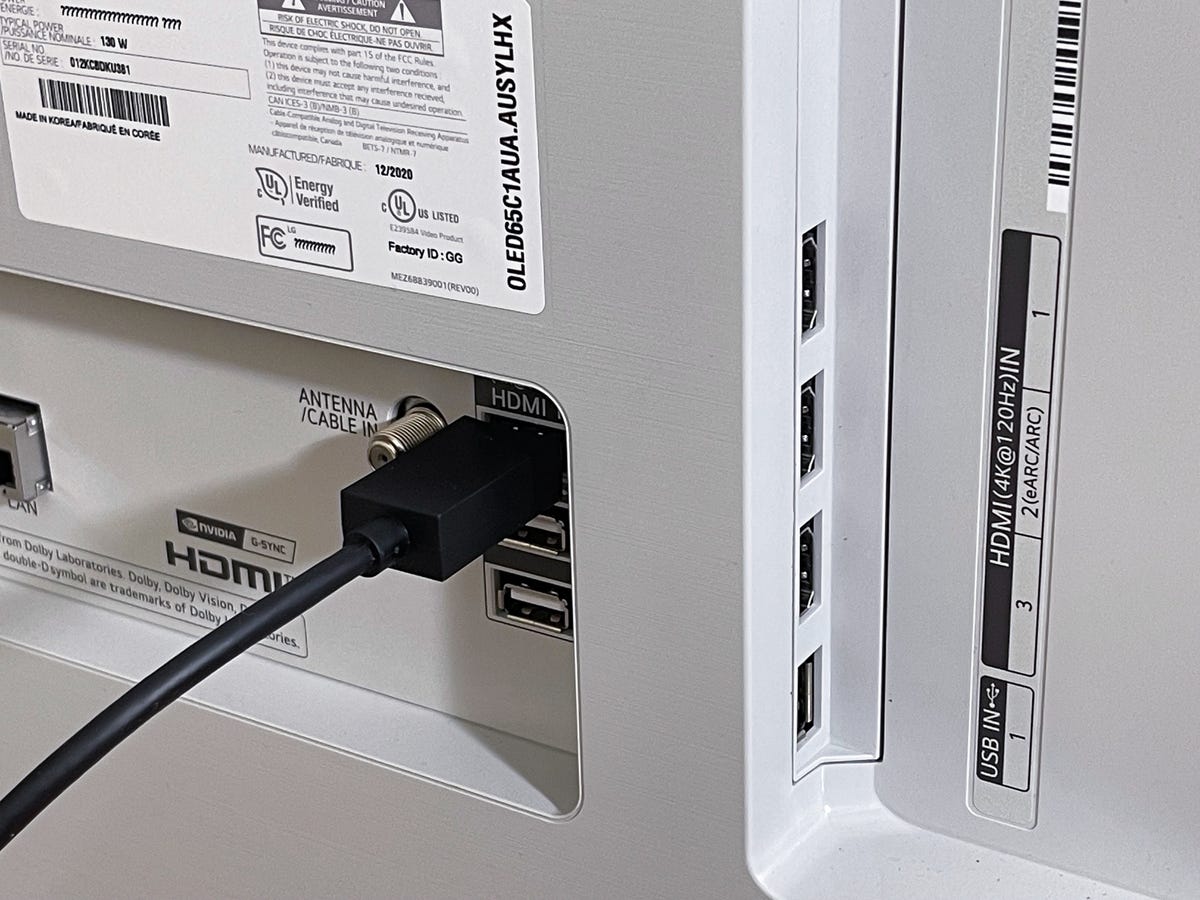
One sure sign of a native 120Hz TV? The ability to accept a 4K/120Hz input.

David Katzmaier/CNET

Antiblurring technologies beyond refresh rate

Refresh rate itself is really only part of the solution. Just doubling the same frames doesn't actually do much for reducing motion blur. Something else is needed.

There are two main methods. The first is frame interpolation, where the TV itself creates brand-new frames that are sort of hybrids of the frame that came before, and the one that comes after. This can fool your brain enough that it doesn't blur the image. Depending how aggressive the interpolation is, however, it can lead to the soap opera effect, which makes movies look like ultra-smooth reality TV shows. Some viewers like the effect, but it's generally hated by film buffs and others who pay close attention to image quality. 

There are different levels of this processing, where a little might reduce motion blur some, and not cause undue harm to the quality of the image. Or on the other end of the "dial," it's cranked up so that there's even less motion blur, but the movement is hyper-realistic and for many, distractingly unreal. Some TVs let you choose how much of this processing gets applied to the image, others have just a single setting. More on these settings further down.

The other alternative is black frame insertion (BFI) or a scanning backlight. This is where all or part of the backlight of the TV turns off (goes black). This effectively means the image doesn't "hold" in place, so your brain doesn't blur it. Do it poorly, however, and many people will see the image flicker. The light output of the TV also drops, as it's not outputting any light for a period of time. 

Both of these techniques are what manufacturers use to come up with their "effective refresh rate" numbers. For example, a TV with a 60Hz refresh and a scanning backlight might claim to have an effective refresh rate of 120. A TV with a more elaborate BFI mode, and frame interpolation, might have a claimed effective refresh rate of "540." There's no transparency in how companies determine their "effective rate" numbers, but there is at least more consistency than there used to be.

It's also possible these features, when enabled, are bothersome over time. Some people are especially sensitive to a flickering backlight, so you might need to turn these features off. If you're concerned about that, or notice motion blur, it's best to find a TV that actually has a 120Hz refresh rate.

Bottom line (should you care?)

There are two things at play here. The first is simple, and one we've said many times before: don't trust marketing. At least, don't trust it at face value. Marketing is designed to sell you a product, not give you information about a product. That's secondary.

The second is being able to reduce motion blur. When 120Hz 1080p TVs first hit the market, they offered a noticeable improvement in motion resolution. The technology has only gotten better. 

But if you're sensitive to motion blur, or you want to get the most from your Xbox Series X or PlayStation 5, it is worth checking for a true 120Hz TV. It would be a shame to let all that extra 4K resolution go to waste due to blur. It's also worth checking reviews for measurements and subjective takes on how the TV handles motion -- that's more useful than any manufacturer-supplied spec.

Note: This article was originally published in 2015 but has been updated regularly since.  


Got a question for Geoff? First, check out all the other articles he's written on topics such as why you shouldn't buy expensive HDMI cables, TV resolutions explained, how HDR works and more.

Still have a question? Tweet at him @TechWriterGeoff, then check out his travel adventures as a digital nomad on Instagram and YouTube. He also thinks you should check out his best-selling sci-fi novel about city-sized submarines and its sequel.


Source

Tags:


Android 12 Has Some Tricks Up Its Sleeve, But You Have to Know Where to Look


Android 12 Has Some Tricks Up Its Sleeve, But You Have to Know Where to Look

Android 13  is now available for certain Google Pixel owners to install, but Samsung Galaxy, Motorola and other Android users will have to wait until later this year to get their hands on Google's latest mobile software update. However, there is still a ton to explore on Android 12, which most people are still running on their Android phones.

Read more: How to Download Android 13 Beta 2 on Your Phone Now

Whether you own a Pixel 6 Pro or a Samsung Galaxy S22, you can find a number of hidden settings and features on Android 12 that can completely change how you use your Android device.

In this story we'll show you how to recover accidentally deleted notifications, use your phone with only one hand and more. Check out what Android 12 has to offer below.

If you want to learn more about how you can improve your Android experience, check out these seven tips to improve your Android's performance and how to save battery with Android's built-in dark mode.

Android 12 keeps your notification history a tap away

Do you ever clear out a notification without reading it? I do it all the time. Android has offered device notification history for some time now, but you either had to know where to look, or you had to install a third-party app to see it. 

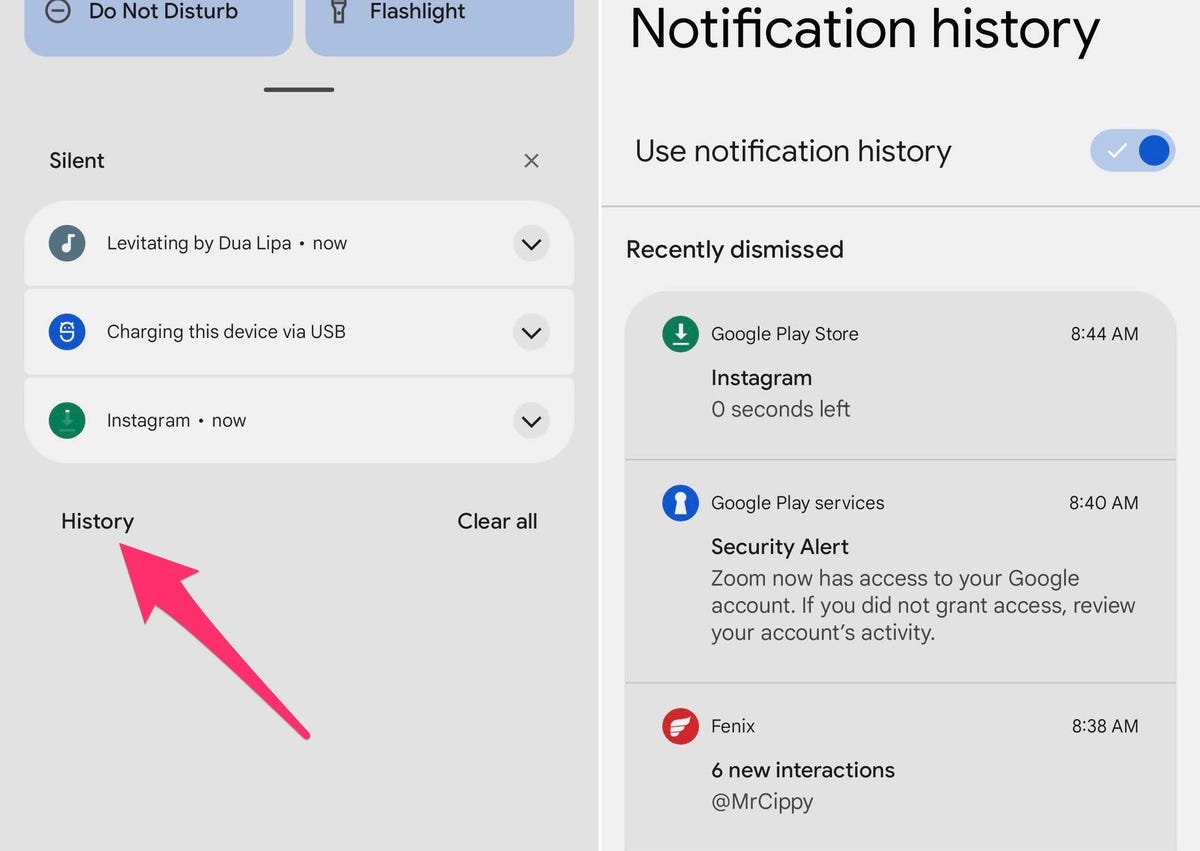
In Android 12, all you have to do is scroll to the bottom of your notification shade, where you'll see a new History button. Tap it, and you'll see recently cleared notifications as well as alerts from the last 24 hours. 

If you see Manage instead of History, that's because Notification History isn't turned on. Enable it by tapping on Manage, then select Notification History and slide the switch to the On position. 

Notification history on Android 12

You now have quick access to your past notifications. 

Screenshots by Jason Cipriani/CNET

Android 12 makes big phones feel smaller

A new one-handed mode in Android 12 may not be a headlining feature, but it's one that could make a big difference in how you use your phone. This is especially true if you're using a phone with a big display, like the Galaxy S22 Ultra.

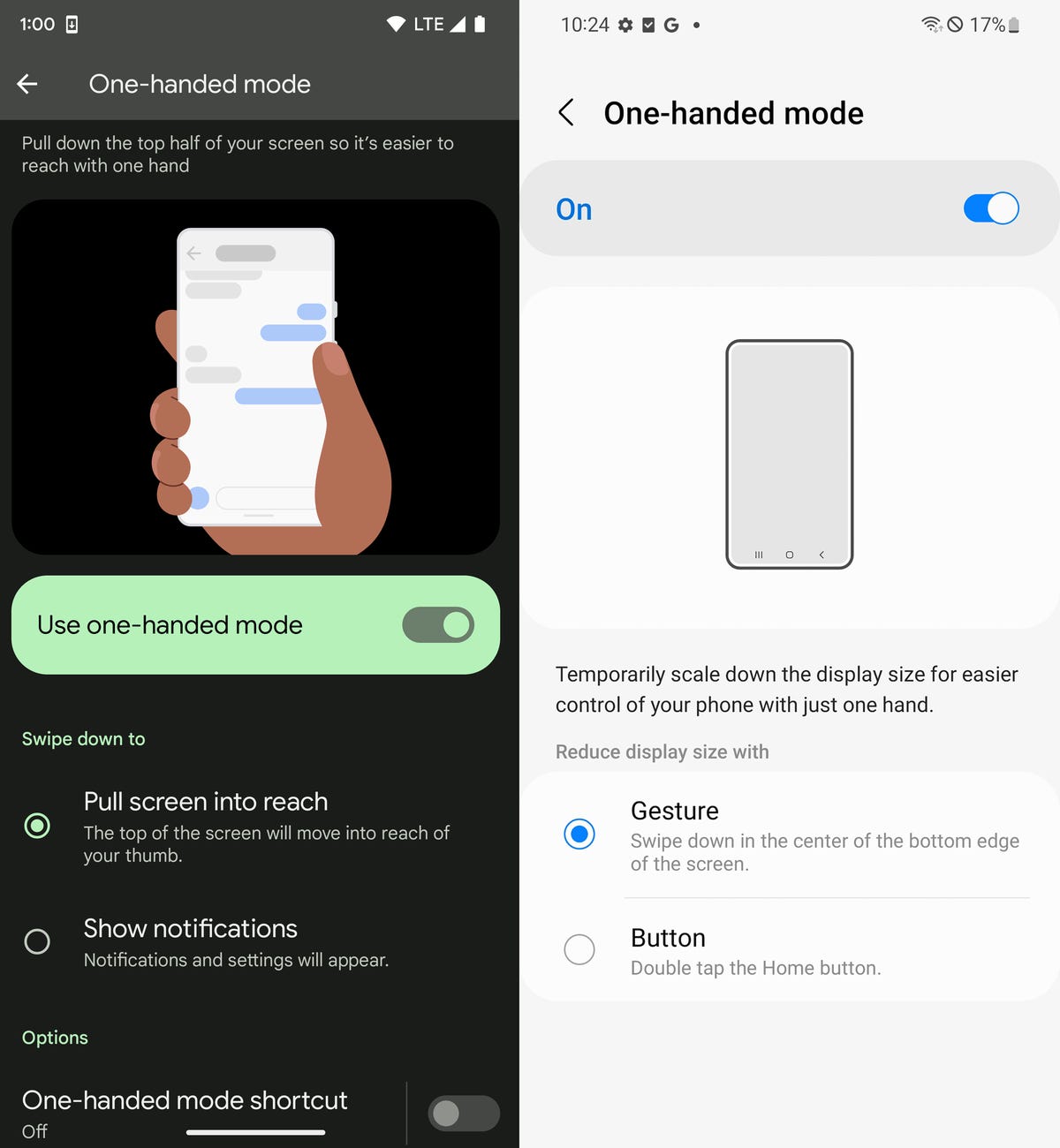
The new one-handed mode moves the top half of whatever's on your screen to the bottom half, making it easier to tap a quick settings tile or a notification. To use it, place a finger on the small bar at the bottom of your phone's screen and swipe down. It may take a few tries, but once you get the gesture figured out, it's easy to reproduce.

Before you can do that, though, you'll need to turn it on: go into the Settings app, type in One-handed mode and toggle the feature on. Depending on which Android phone you have, this feature might have different settings you can toggle off and on.

One-handed mode on Android

Left: Google Pixel 6 Pro. Right: Samsung Galaxy S22.

Screenshots by Nelson Aguilar/CNET

There's a dedicated gaming mode in Android 12

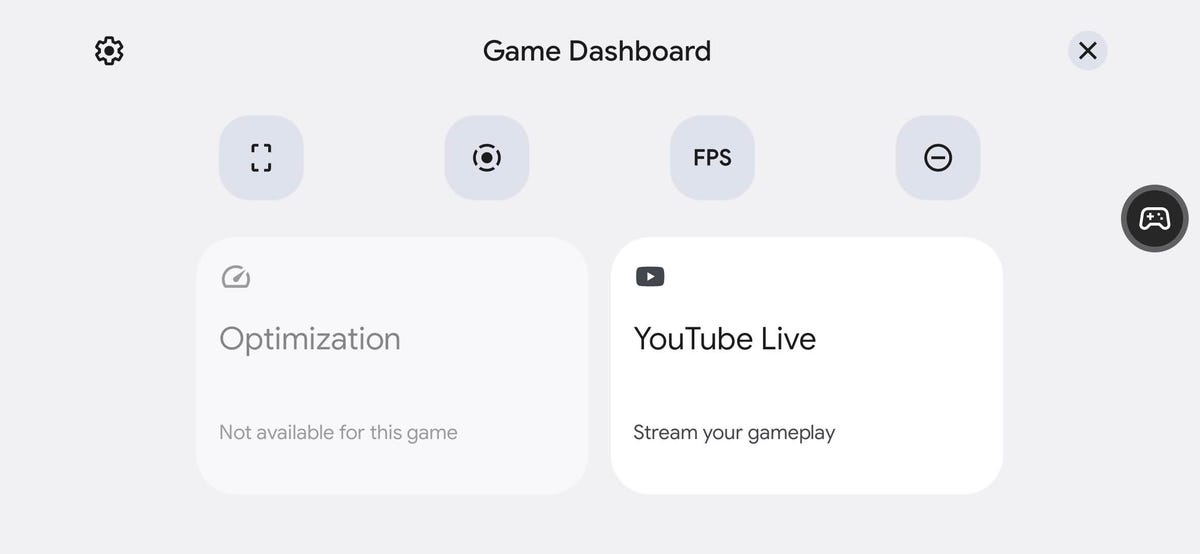
If you play a lot of games on your Android device, you'll be happy to know that Google added a dedicated gaming mode to Android 12. When it's turned on, your phone will do things like automatically turn on do not disturb when you start playing. 

But you'd never know the mode existed if you didn't venture deep into, of all places, your notification settings. More specifically, go to Settings > Notifications > Do Not Disturb > Schedules. Once there, check the box next to Game Mode to turn it on. Next, tap on the Settings gear icon to and toggle both items.

In my experience testing it, game mode doesn't work in every game (looking at you, Asphalt 9). It does work in Call of Duty Mobile, however. When it's active, you can do things like force your phone to optimize itself for gaming in a single-tap or view your device's current frames per second.

Game mode on Android 12

Use the new Game Mode in Android 12 to boost performance or live stream on YouTube. 

Screenshot by Jason Cipriani/CNET

Android 12 has a new app layout option

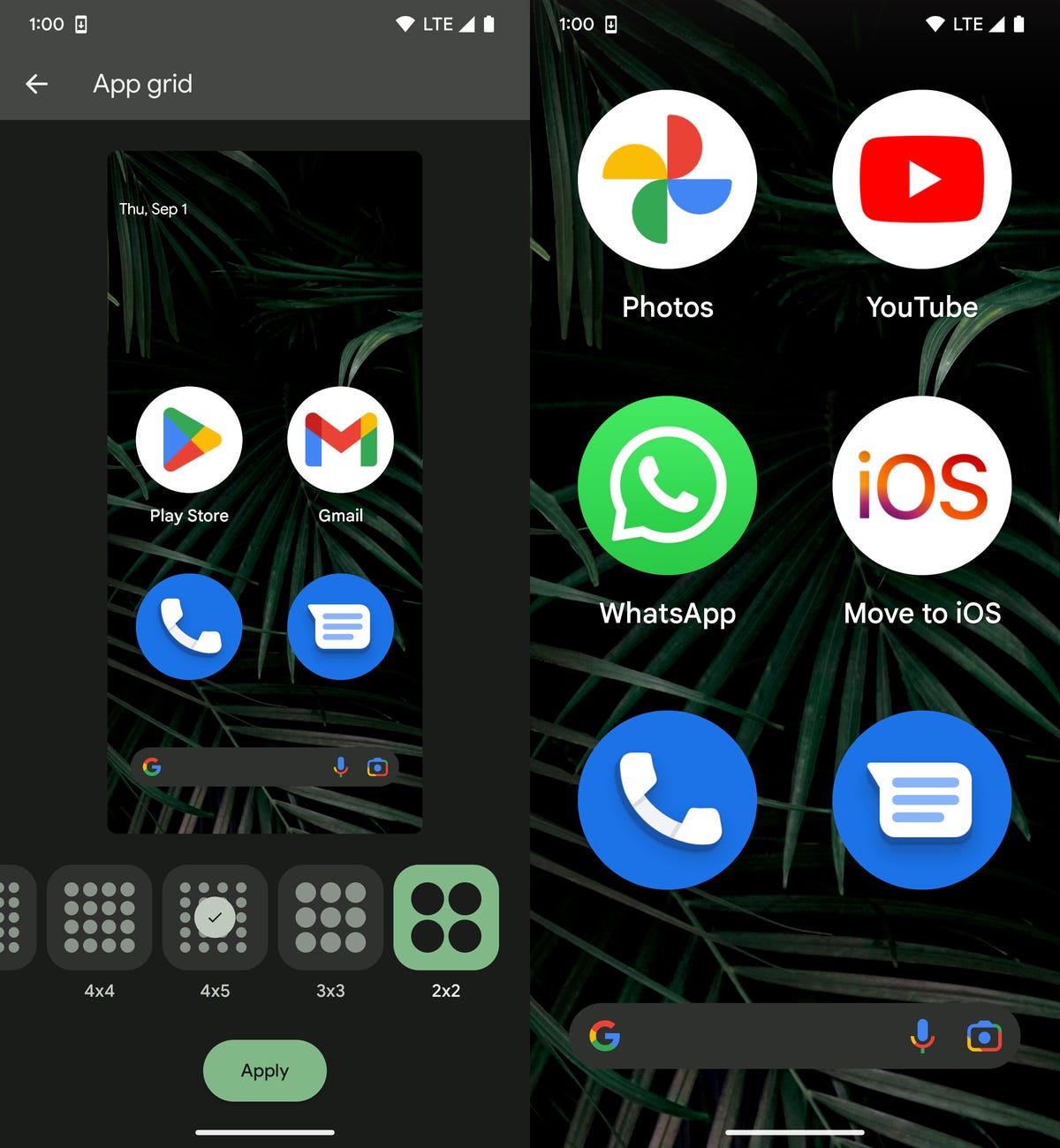
The app grid on your phone's home screen normally ranges for a 4x4, 5x5 or 6x6 grid (or similar combinations). However, in Android 12 on the Pixel, there's a new app grid option that's downright funny at first glance -- 2x2. I assume this is limited to just Pixel phones, but hopefully, other phone-makers adopt it, as it's a huge accessibility feature for those in need of larger app icons. 

Switch to the new 2x2 layout with a long-press on your home screen, then select Wallpaper & style > App Grid > 2x2

App grid on Google Pixel

This 2x2 app grid feature is only available on the Google Pixel.

Screenshots by Nelson Aguilar/CNET

For more, check out the best Android phones and Samsung phones to buy in 2022, every reason why you should give Pixel phones another chance and how the Pixel 6 with its Tensor chip is more exciting than the iPhone 13.


Source

Tags:

Search This Blog

Menu Halaman Statis

close